What is Star Citizen? A practical introduction to life in the verse
Understand Star Citizen, its activities, ships and learning curve, then choose a manageable first session without buying a fleet.

Star Citizen is a multiplayer space game in active development by Cloud Imperium Games. You can fly ships, trade, mine, salvage, fight, race and explore. Its appeal is choosing a life in a shared universe, but learning the practical steps takes time. Start with one small activity and a ship suited to the people you actually play with.
What does a session actually look like?
Imagine choosing a small objective before you start: visit a station, retrieve your ship, make one safe landing and get home. That sounds modest beside the enormous ships and cinematic battles in the trailers. For a first evening, it is a useful measure of success. You learn where your equipment is, how to reach the spaceport and what your cockpit is telling you. Each of those skills supports more ambitious activities later.
The same idea works after hundreds of hours. An experienced fighter pilot trying salvage is learning a different workflow. Being good at combat does not automatically explain material extraction, cargo handling or where to sell the result. Choose a learning objective, identify the equipment and people it needs, and leave room for mistakes. SC Nomads organizes its guides around that process rather than expecting you to memorize a whole universe.
What can you do in Star Citizen?
CIG presents flying, trading, mining, salvaging, combat, racing and exploration as activities in its multiplayer universe. The important question for a new player is which part sounds enjoyable enough to learn. You do not need to pick a permanent career. Treat the first few sessions as short experiments and keep the activities you want to repeat.
Our suggestion is to choose by the kind of evening you want. For a methodical task, investigate mining or salvage. For a journey with loading and delivery decisions, investigate cargo. For teamwork under pressure, investigate combat or rescue. For learning a route and improving a run, investigate racing. These are starting points for choosing a guide, not promises of income, difficulty or a bug-free session.
- A clear objective: what will count as finishing?
- The right equipment: what is essential and what is optional?
- A realistic crew: who pilots, operates tools and handles cargo?
- A return plan: where will you land, unload or meet again?
What do you need before you play?
CIG’s current getting-started checklist points you to an RSI account, compatible hardware, a Star Citizen game package and the RSI Launcher. Check the package contents before purchasing. A ship listing and access to the game are separate things to inspect. The launcher guide explains how to filter your RSI website hangar for game packages and verify what is included.
Use the official checklist for current access requirements and the official store for current prices. Do not choose a purchase because an old video says a specific price or bonus will always apply. If you already own access, start by learning with what you have. This article does not require you to buy another ship or use a referral link.
Learn the controls before risking a complicated trip
Arena Commander is accessed from the main menu and includes modes for flight, combat and racing. CIG describes it as a place to practice. Check the mode you choose rather than assuming every option has the same rules. This makes it a useful place to become familiar with movement before combining it with shopping, transit, contracts and cargo.
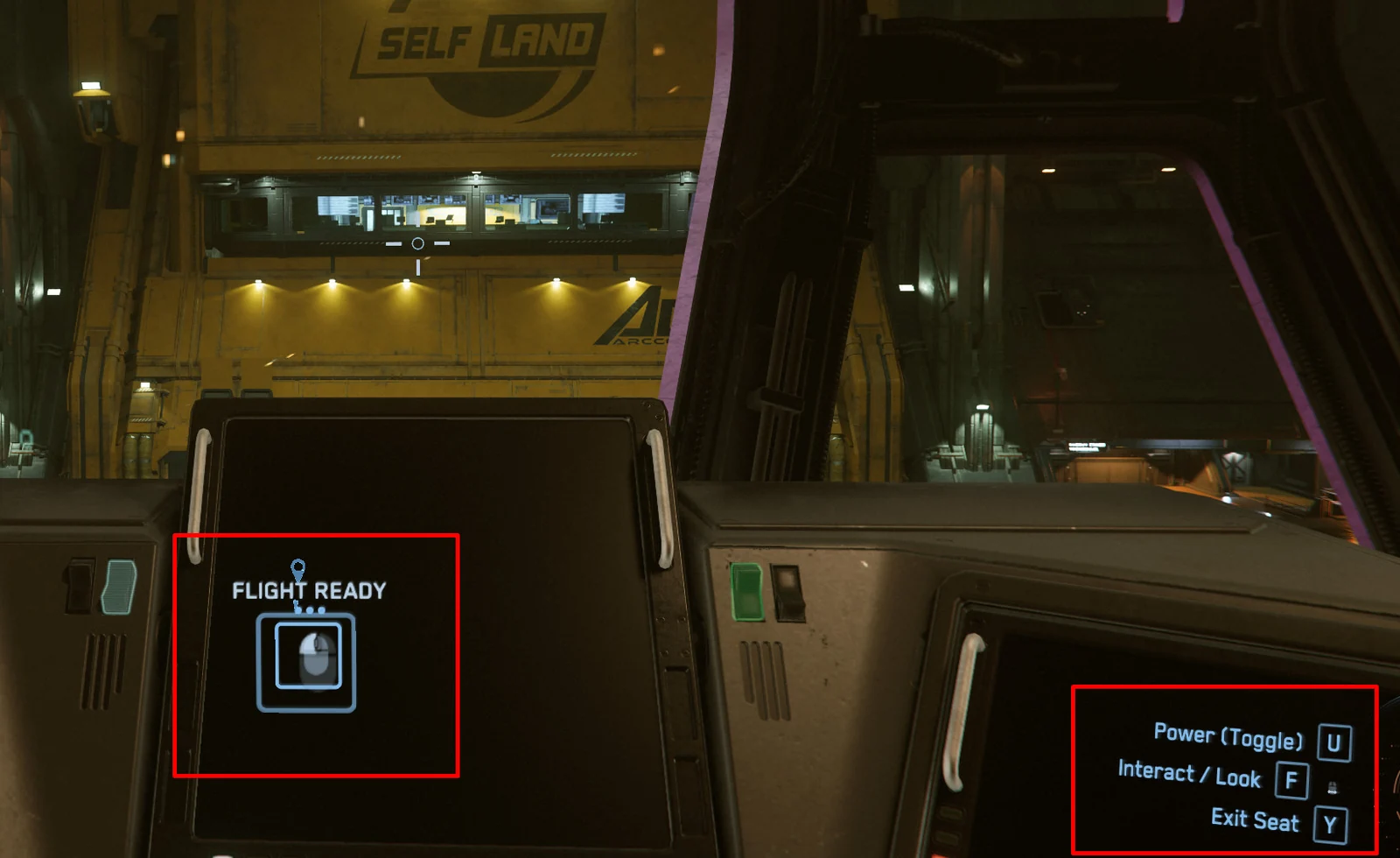
When a guide tells you to change a mode, ask three questions: which input changes it, what should appear on screen, and what should you do if that indication never appears? Those questions distinguish an instruction from a hint. Our practical guides put the control and the expected result together. Your own bindings take precedence over a default shown in a guide; an input can also behave differently depending on the active seat or tool.
A bigger ship is a different job, not an automatic upgrade
A ship can look perfect in a gallery and still be a poor match for your normal evening. Look beyond its capacity. Ask where the pilot sits, where the working tools are controlled, how cargo is moved and how much time you will spend walking between stations. Being able to launch a ship alone is not the same as comfortably completing its job alone.
For your first trial, write down the task you want to perform and the people available. Compare the ship’s specialist caveats with those needs. If a ship depends on separate work stations, try crewing it before committing to ownership. A short trip with an owner can reveal more about that workflow than a large specification table. In SC Nomads, a favorite is a preference, a wishlist is an intention and a shared owned ship is a member’s own declaration. None of these should be confused with official ownership verification.
Set expectations for an evolving game
Star Citizen is in active development. A useful guide therefore needs context: its source, the build it refers to and the observable result you should expect. A date on an article does not mean every instruction has been personally tested in the current game. SC Nomads distinguishes source research, community review and in-game verification so you can judge the evidence.
When a step fails, first identify the exact point of disagreement. Was the control missing, the displayed mode different, or the destination unavailable? A report with that detail is much easier for another player to reproduce than “it does not work.” Use the linked practical guide’s improvement action for a correction. Independent review protects the published instructions while the suggestion is discussed.
You can learn alone and still find regular friends
CIG’s Guide System connects both beginners and experienced players learning a new subject with volunteer guides. It is one available route to hands-on help. A lasting crew has a slightly different need: compatible time zones, shared interests and an honest conversation about what each person wants from a session.
On SC Nomads, start with a profile you are comfortable sharing. Say which activity you want to learn, when you tend to play and whether you welcome friend requests. You can use a written guide as a shared plan with another player, then return to it when you forget a step. The aim is to make the next session easier to start and to make a useful connection along the way.
Sources and editorial notes
This is an introduction and an editorial learning plan. Source checking does not certify a procedure as tested in the current game. For exact controls, equipment and known limitations, use the linked field guides and their patch notes.
- Star Citizen official overview video, 19 December 2024
- CIG: Get Started checklist, updated 16 April 2026
- CIG: Install the RSI Launcher, updated 27 July 2026
- CIG: Multiplayer game options, updated 27 July 2026
- CIG: Guide System, updated 31 July 2026
Found a factual discrepancy? Suggest a correction on the relevant linked guide, or apply to help improve the platform.