How to choose your first Star Citizen game loop
A practical way to compare mining, salvage, cargo, combat and support activities by preparation, crew, equipment and the experience you want.
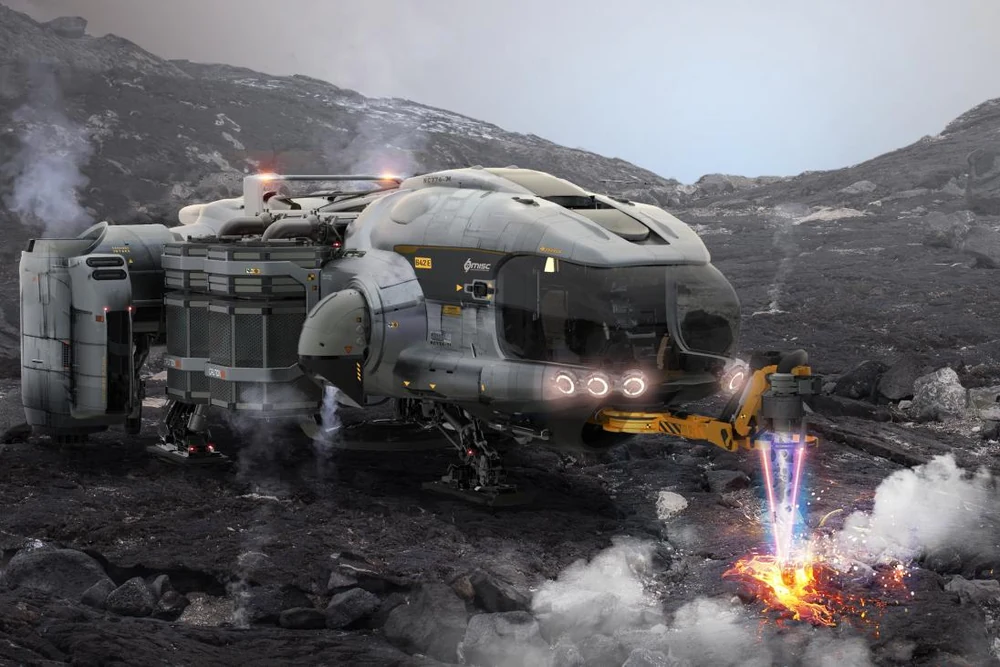
Choose your first game loop by the experience you want, the equipment you can access and the people available to play. Begin with one complete practice run, including preparation and returning home. Compare that experience before investing in more equipment or a larger ship.
What does “game loop” mean?
A game loop is a repeatable sequence of decisions and actions. For learning purposes, it helps to include the whole sequence: prepare, travel, perform the job, handle the result and return. The dramatic part in the middle can be very different from the work surrounding it. A salvage beam, for example, is only one part of a trip that also involves choosing a target and handling material.
Do not judge an activity only by an edited highlight or a claimed hourly payout. Ask what happened before and after the clip. Who supplied the ship? Who carried the cargo? How was the group organized? How long did everybody wait? Our approach is to make those hidden steps visible so you can choose a session that suits your circumstances.
Finish the basics before specializing
If you cannot yet reliably find your equipment, retrieve your ship and complete a landing, make those your first objectives. This is not a detour from the interesting activities. It reduces the number of unfamiliar systems competing for your attention when you try them. Our recommended first sequence is supplies, equipment, hangar, flight and navigation, followed by a chosen profession.
Use a small written checklist for that sequence. Tick off what you have physically checked, not what you assume is ready. A shopping list is not proof the items are in your inventory, and a loaded route is not proof you can reach its destination. Follow each guide’s visible confirmation and recovery advice before moving on.

Compare the work you will actually be doing
Mining suits a learning experiment focused on reading information and controlling a process. Before a first run, understand what the target display means, which control changes power and what the warning state looks like. A mining guide should explain those observations together. If you only know the name of a mode, you do not yet know how to use it.
Salvage offers a different equipment and material-handling workflow. Compare the role of the pilot with the role of the tool operator before choosing a ship. Cargo makes preparation, space, loading and delivery conditions central to the plan. Combat and rescue place different demands on coordination and recovery. Racing encourages repeatable practice. None of these descriptions is a ranking of what is easiest or most profitable.
- Mining: learn the display, mode and power response before chasing yield.
- Salvage: identify the working station and material-handling steps.
- Cargo: plan loading, destination and the conditions for completing the job.
- Combat and rescue: agree roles, equipment and a way to regroup.
- Racing and exploration: pick a route and an achievable finish point.
Choose the crew before choosing the biggest ship
Write down who will actually attend. “A ship supports several players” is not the same as “several players will be here tonight.” A solo pilot should inspect any requirement to leave the pilot seat for a working station. A two-person group should decide whether both players have useful tasks throughout the run or whether one will spend most of it waiting.
For a shared first run, assign simple responsibilities before launch: who explains the procedure, who pilots, who operates the tool and who handles the result. Agree how any proceeds and costs will be shared. SC Nomads does not enforce private in-game agreements, so clarity between the people involved matters. Check a member’s interests and availability, talk first and use the platform’s contact and reporting controls when appropriate.
Separate essential equipment from tempting upgrades
Start with the equipment needed to complete the training objective. Put possible upgrades in a separate list. For each upgrade, ask which specific problem it solves and what tradeoff it introduces. A modification is difficult to evaluate if you have not yet learned how the unmodified process behaves.
Ship specifications also need context. A capacity figure does not explain access, loading effort or whether a particular component fits the intended configuration. Read the source date and the practical caveats. Use the ship page to identify what needs checking, then use the activity guide to understand the actual sequence. If the information conflicts with your current build, propose a sourced correction rather than quietly working around an instruction other beginners will also read.
Plan one complete practice run
Our suggested first-run format has four parts. First, write one observable result: complete one safe landing, understand one fracture, or deliver one small load. Second, prepare what is required and identify the return destination. Third, perform the task slowly enough to explain each action. Finally, return and review what was confusing. The result can be a successful lesson even when it is not an impressive payout.
Set a stopping rule before you start. If the required tool cannot be operated, the needed person cannot join or a step behaves differently from the guide, switch to a simpler practice objective or end the experiment. Repeating an unexplained failure usually teaches less than recording the exact screen state and finding the missing information.
- My objective: one result I can recognize.
- My preparation: the actual equipment and people ready.
- My return: a destination and a way to finish the session.
- My review: one thing learned and one thing still unclear.
Turn one lesson into a guide you can return to
Save the guide when you find it useful. If you learn with someone, share the relevant section rather than asking them to remember where a detail appeared in a long video. When a corresponding video is available, use it to see the motion and timing, then return to the written instructions for the exact step. A written guide and a demonstration answer different parts of the same question.
A useful correction identifies the guide section, describes the observed difference and gives build or source context. For a keybinding, include the input, the active seat or tool, and what changed on screen. SC Nomads sends that suggestion through independent review before changing the published guide. Your first uncertain attempt can therefore make the next player’s experience better, whether you eventually prefer mining, rescue, cargo or something else entirely.
Sources and editorial notes
This is an introduction and an editorial learning plan. Source checking does not certify a procedure as tested in the current game. For exact controls, equipment and known limitations, use the linked field guides and their patch notes.
- CIG: Guide System, updated 31 July 2026
- CIG: Multiplayer game options, updated 27 July 2026
- SC Nomads: source-linked mining procedure
- SC Nomads: source-linked salvage procedure
- SC Nomads: source-linked cargo procedure
Found a factual discrepancy? Suggest a correction on the relevant linked guide, or apply to help improve the platform.